
Il "Times" e l' "Independent" pubblicano in questi giorni due interessanti interviste di Robin Gibb, in questi giorni più che mai attivo.
L'intervista del Times rivela tra l'altro che il primo ministro inglese Gordon Brown è un fan dei Bee Gees, mentre nell'intervista all'Independent Robin dichiara con forza di pretendere più rispetto per i Bee Gees e per le altre grandi star che contribuito alla grandezza della musica pop e rock inglese nel mondo. Interessante anche il commento (che sottoscrive le affermazioni di Robin) contenuto in un articolo dell'Indipendent , successivo all'intervista.
Inoltre in questi giorni Robin ha registrato una video intervista come testimonial di una campagna lanciata dal governo inglese per incoraggiare i padri separati a restare sempre vicini ai figli. Il sito web del "Times" riporta la sintesi e la trascrizione della video-intervista, che sarà disponibile sul sito http://www.dads-space.com/ a partire dalla fine di maggio.
(Fonti (Timesonline, www.independent.co.uk)
Gordon Brown’s secret to stayin’ alive - listen to the Bee Gees
How is the Prime Minister surviving a grim period in office? By listening to the Bee Gees every day, the ever so well connected Robin Gibb reveals
Robin Gibb counts prime ministers past and present among his friends
Will Hodgkinson, (The Times 16-05-20089
Not everyone hates Gordon Brown. “He listens to our music every day,” says his friend, the Bee Gee Robin Gibb. “Gordon likes our music and I like Gordon. I was with him at a dinner recently” – Gibb says this with the air of a man for whom dining with the Prime Minister is all in a day’s work – “and he was asking: who is creating the big song catalogues of today? The answer is no one. Record companies today don’t see the need for creating big catalogues because that involves investing in careers, which they are no longer doing. But great songs are the backbone of music. They transcend the artist and the record and become part of the culture.”
It is not hard to see why Gibb is passionate about the craft of the pop song. The Bee Gees, the band he formed in his teens with his late twin Maurice and their elder brother Barry, are one of the most successful acts of all time. A fair chunk of the world’s population can sing along to Tragedy, Jive Talking and Stayin’ Alive.
The Bee Gees recently became the first band to be made fellows of the British Academy of Composers and Songwriters, for which the flagship event is the Ivor Novello Awards next Thursday. Since the ceremony is all about celebrating the art of the song, Gibb is one of its most vocal supporters.
“The Ivor Novellos [are] the beacon of the songwriting establishment in Britain,” says Gibb, a remarkably thin man with a gentle if slightly cadaverous air about him. “I come from an era when artists wrote their own songs, when people like Paul McCartney and Elton John created a huge body of work. We are in real danger of losing that tradition.”
Gibb lives in a 1,000-year-old former monastery in Oxfordshire with grounds equivalent to a reasonably proportioned London park. And he counts prime ministers past and present among his friends. “Tony Blair is a great friend,” Gibb says of our former leader, who took a holiday at Gibb’s Miami house in 2007. “I respect him tremendously. In this business you have friends from all backgrounds, including prime ministers and princes, and we get on like a house on fire.”
Brown likes the Bee Gees music, Gibb says, “because it talks about human relationships and experience, rather than specific events, and reaches out across the decades.” Brown has told Gibb: “Your music is absolutely timeless.”
Gibb is in fine form, talking rapidly in a Mancunian twang. Interviews have suggested that he feels the Bee Gees are not taken as seriously as they should be – there was the incident in 1998 when all three stormed off the set of Clive Anderson’s television show after the presenter made a joke about their once being called Les Tosseurs – but if this is still the case, he’s not showing it.
“We’re not just performers but also songwriters, which is the important thing,” he says. “I love Mozart because of his emphasis on melody, but in his time he wasn’t taken seriously at all. Now nobody listens to Mozart and says, ‘That’s so 1780s’. What you are left with is the music.”
“The music” has been Gibb’s saviour. He grew up in a poor family in Manchester until he was nine, when the family moved to Australia. The Bee Gees formed soon after, inspired by the broad variety of music they heard on Australian radio. “We didn’t have a pot to piss in when we were growing up – my dad couldn’t hold down a job – but we didn’t feel we were missing out because we had a lot of fun writing songs. We would hear our favourite bands on the radio and then try and write in their style, pretending that we were coming up with their next hit. We never thought about fame or anything like that.”
Does it bother him that the pop song is frequently dismissed as teenage trash? “That’s just an attitude and it doesn’t impact on the quality of the music,” he replies. “Writing a simple melody that people remember and that can be interpreted in different styles is one of the hardest things to do. Look at Islands in the Stream. We wrote that as an R&B tune but Dolly Parton and Kenny Rogers turned it into pure country. A lot of classical composers worked in the same way. It’s rumoured that Beethoven sat in Bavarian taverns and stole melodies from travelling folk singers, so concepts of what is high or low art are irrelevant.”
The Bee Gees were writing songs at a farmhouse in France in 1976 when their manager, Robert Stigwood, approached them to provide music for an adaptation of a short story by Nik Cohn called Tribal Rites of the New Saturday Night. “We weren’t at all sure about it,” Gibb says. “It’s a dark film about what was really going on in New York at the time, and it has gang rape, suicide . . . Robert Stigwood came over to listen to our new songs while crickets chirped and cows mooed in the background, and he talked about this thing called disco we had never heard of, and between us we came up with this marriage of film and music that eclipsed everything. It was a low-budget film with no marketing at all and yet it captured imaginations.”
At the height of their powers the Bee Gees couldn’t help but write smash hits. “We wrote Tragedy and How Can You Mend a Broken Heart? in one afternoon at our house in Addison Road in Kensington. Both went to No 1, so that wasn’t a bad afternoon’s work,” he says. “We would sit around with a tape recorder and a keyboard and bash out ideas, and I think it worked because we had fun. If you think too hard about what you want from a situation it never works. The secret is to enjoy it.”
Since Maurice died in 2003 a return to that golden age of fraternal hitmaking is impossible. But Robin and Barry are in talks about writing a musical based on their back catalogue, and there are always mainstream pop stars ready to look to a Gibb brothers composition for material – Barbra Streisand, Diana Ross and Destiny’s Child are a few that have already done so.
Gibb’s main concern for the future is that the songwriting culture is in danger of dying out. “Programmes like The X Factor turn the song into a vehicle for celebrity rather than the other way round,” he says. “Our whole lives have been made up of projects that went into creating a catalogue of songs that the world has embraced. I just wish that the world today [was] more like the world we started out in.”
"Jive talkin': Why Robin Gibb wants more respect for the Bee Gees " - Tim Walker meets a famously prickly musician (The Indipendent, 12-5-2008)
Gibb says the Bee Gees should be celebrated for what they've achieved
Interviewing a Bee Gee can be a tricky business. There was the notorious incident on Clive Anderson's talk show when all three brothers Gibb strode off after tiring of their host's wisecracks. And there was the time Robin Gibb, invited on to Radio 4's Front Row to discuss his last solo album with the probing but hardly combative Mark Lawson, peeled off his mic in mid-conversation.
The Gibbs would have made good guests for Graham Norton, but the comedian scuppered that prospect by making a tasteless joke about the death of Robin's twin brother Maurice in 2003. At the time, Robin, perhaps understandably, expressed a wish to rip the presenter's head off.
It's no surprise, then, when our first appointment, due to take place at the star's converted monastery in Oxfordshire, is broken. A second meeting is cancelled, too. Third time lucky: we meet at a private members' club in Cavendish Square in London.
In March, Gibb, 58, was made President of the Heritage Foundation. The organisation, he explains, is devoted to "the recognition of achievement by people across the spectrum of British cultural life", with activities including tribute events, concerts and the unveiling of blue plaques.
Now, Gibb is heading the foundation's Bomber Command campaign. "It's 63 years since the end of the Second World War," he says. "We want the 56,000 guys who lost their lives protecting the freedoms of all of Europe to be honoured with a statue in the centre of London."
Gibb is bothered by Britons' lack of pride in their history. "We whinge about our past, but we're a greatly admired culture. We're the country that produced Shakespeare, for Christ's sake, the Brontës, Winston Churchill."
His home in Oxfordshire is "a microcosm of British history. It's 1,000 years old – older than Westminster Abbey. It survived the dissolution, and during the Civil War it was used by both Royalists and Parliamentarians. In the Second World War, the American army had a base there."
Gibb and his twin Maurice were born on the Isle of Man in December 1949; Barry, the other surviving sibling, was three years their senior. The trio were brought up in relative poverty in Manchester until 1958, when their youngest brother Andy was born, and the family relocated to Australia, where the Bee Gees first found fame.
"As a teenager growing up in Australia," Gibb says, "I realised that the Australians value British history more than the British do. Tony Blair spent a few years growing up in Adelaide and I had the same conversation with him."
Blair, "a good friend", holidayed at Gibb's mansion in Florida last year, sending the tabloids into a tizz. In 1992, Gibb's wife Dwina had been inaugurated as patroness of the Order of Bards, Ovates and Druids, a British neo-druidic order. She and Gibb were also candid about the openness of their marriage, a mistake he learnt from. "I don't understand why the press went crazy over that," he says. "They made very unnecessary jibes at my wife. It was a personal attack on her."
Unnecessary jibes are what have riled the band in past interviews: Anderson making the obvious joke about their former moniker, "Les Tosseurs", and Lawson asking Gibb how he felt about the lack of respect afforded the band. The Bee Gees are often treated without seriousness, mocked for the big hair, dismissed as men of the Seventies.
"Nobody ever says, 'Mozart? That's so 1780s!' I think we should see people for what they've achieved. Mozart was a womaniser and a drunk, but we evaluate him on his works," Gibb says. "We've got one of the biggest catalogues in the world. There are songs we wrote in 1968 that people are still singing. Ronan Keating did 'Words', Destiny's Child did 'Emotion'. There's very few artists with that kind of history."
The Bee Gees' record sales top 220 million. The only people who have outsold them are Elvis, The Beatles, Michael Jackson and Garth Brooks. Their compositions have shifted more units than The Rolling Stones, Abba, Elton John or U2. It's unlikely that the Bee Gees will ever be toppled from that top five, even now that the name has – probably – been retired.
Since Maurice's death in January 2003, Barry and Robin have performed together only a handful of times at charity events. The old tales of animosity between the pair are quickly dismissed. "Retiring the name is an emotional decision. We'll decide what we want to do in the next couple of years. We are planning to work together, but what shape or form that will take, it's too early to tell."
The album Gibb is recording for release later this year will, inevitably, be infused with the experience of losing his twin. "In many ways I don't accept that he's gone," he says. "I miss his presence, but it's something I have to live with."
Maurice wasn't the first family member to die unexpectedly. Andy, the youngest Gibb, was a Seventies star in his own right with a string of US solo No 1s. During the Eighties, the prospect of Andy joining the Bee Gees was much discussed, but in March 1988, he died from a heart condition. He was 30. His brothers didn't hide the fact that past abuse of drugs and alcohol had probably contributed. "Losing two brothers at a very early age is one thing, but the fact that both their deaths were unnecessary only compounds it," says Gibb.
Thirty years after its release, Saturday Night Fever is still the best-selling soundtrack of all time. Until then, the Gibbs were best known for their late 1960s ballads, like "Massachusetts". But, says Gibb: "We were dying to get into our soul influences. We wanted to do more than just ballads."
In 1976, they released Children of the World, complete with the No 1 blue-eyed soul single "You Should Be Dancing". They were working on new songs at a farmhouse in France when they got a call from Robert Stigwood. "He called from LA," Gibb recalls, "and said, 'We're making a film with this new guy John Travolta, and we're rehearsing to 'You Should Be Dancing'. Do you have any more songs?'" The rest is history.
"All those songs – 'Night Fever', 'How Deep Is Your Love', 'More Than a Woman', 'If I Can't Have You' – were written in a three-week period at five o'clock in the morning, with the only view from the window being of the cows that needed milking. They were the first to hear 'Stayin' Alive'."
Saturday Night Fever still overshadows the Bee Gees' long career. "Fever was a very important project, but the Gibb brothers were responsible for a wide range of songs," Gibb says, "from 'Islands In the Stream' for Kenny Rogers and Dolly Parton, to 'Chain Reaction' for Diana Ross, to 'Heartbreaker' for Dionne Warwick, to 'Woman In Love' for Barbra Streisand. There's only a handful of people with catalogues like ours – the Stones, Elton, Abba and The Beatles.
"I get together with Paul [McCartney] a lot," he continues. "We talk about how we used to record. When we and The Beatles were recording we had no reference points. We just went into the studio and did what came into our minds. Many artists today just go into the studio and try to copy what's in the charts. We saw what was in the charts and said, 'Let's try to do something different.'"
Terence Blacker: These elderly pop stars have a right to feel miffed (The Indipendent, 13-05-2008)
The prejudice has less to do with the music than the way its performer looks, or his views
On the face of it, there are few sillier or unseemly sights in public life than a pop billionaire stroppily complaining that he is not taken seriously enough. Sir Cliff Richard does it every other week. Sir Paul McCartney seems to exude dissatisfaction with his lot. And that high-pitched, perfectly harmonised sound you can hear in the background almost certainly comes from one of the Bee Gees, those perennial chart-toppers in the moaners' hit parade.
A few years ago, they walked when Clive Anderson made a disrespectful, unfunny joke about them. A Mark Lawson interview with one of them, Robin Gibb, on Radio 4 was also terminated abruptly. This week, in The Independent, Gibb complained that it was odd that a group whose records have sold over 220 million and whose compositions exceed the sales of the Rolling Stones, U2, Elton John and Abba (and, he might have added, have suffered their share of misfortune) are still a byword for jokes about hair, teeth and the 1970s. "Nobody ever says, 'Mozart?' That's so 1780s!' I think we should see people for what they have achieved."
He is right to be miffed. By the simplest and most persuasive criteria of artistic success – how much lasting pleasure a work has given – pop musicians like the Gibb brothers deserve respect and gratitude, perhaps even from those who are not particularly fans of their music. The music that they wrote is in the bloodstream of a generation. People grew up, fell in love, married and had children to it. Their songs were taken for granted precisely because they were so ubiquitous.
Music is probably more vulnerable to snobbery than any other art form. For every talented pop composer, there are a thousand Clive Andersons, waiting on the sidelines to say how naff they are. More often than not, the prejudice has less to do with the music than the way its composer or performer looks, or his clothes, hair, views or sexuality. Almost always, the popular success of a musician confirms his lack of coolness to more sophisticated people.
Judgements as to which musicians are culturally acceptable are utterly subjective and, in the long term, meaningless. In the 1950s, when Gerry Goffin and Carole King were writing hits for Bobby Vee and The Drifters, the songs were dismissed as bubble-gum music for kids; a few years later, by some strange alchemical process which only rock journalists will understand, the same songs had become pop classics. A couple of decades later, Abba were seen to be the height of musical vulgarity. Only after they stopped writing and performing was it decided that, in fact, they were rather innovative and ahead of their time.
It must be annoying for someone like Robin Gibb, who has contributed so much to national life, not to mention to the national exchequer, to find that he is still a joke for the usual gang of scoffers. The state now and then attempts to recognise the work of pop musicians by handing out baubles and honours but, as poor old Sir Cliff and Sir Paul have discovered, a knighthood can often merely confirm a person's naffness.
Yet there is something which could be done to strike a significant blow against musical snobbery. Last year the Government announced that a national songbook would be introduced to encourage the nation's children to share and enjoy music. There would be 30 songs which would be the focus of a campaign called "Sing-Up". The project is now in all sorts of trouble. The list was thought to be too short and too prescriptive. Songs from different cultures were introduced in response to accusations of cultural imperialism. When last counted, there were about 600 songs in what has now become the National Song Bank.
Yet the idea was good. If the list had been increased to 50 songs and revised once every two years with the help of teachers and children, it could have engaged schools in understanding what made songs last. Because music has the power to unify, there would surely have been a case for putting the emphasis on songs from the main culture.
The list, as it stands, is dull: too many nursery rhymes and traditional songs. The national songbook should include the best popular songs of the past, whether they are naff or not. The Beatles' "Yellow Submarine" should be there, and so should Ralph McTell's "Streets of London" and Cliff Richards' "Congratulations". Something by the Bee Gees – "Stayin' Alive", perhaps – would certainly be a contender.
There will be discussions and rows but the songbook would be a great, self-renewing celebration of the power of music. It would also be the best way to pass on to future generations songs that have brought us pleasure – however unfashionably – in the past.
"Stayin’ in touch: Bee Gee tips for absent fathers " (The Times , 6-5-2008)
The government has enlisted Robin Gibb, the Bee Gees singer, and Gary Lineker, the sports presenter, to encourage fathers separated from their children to stay close to them.
In an interview to be shown at a launch event this week by Ed Balls, the children’s secretary, Gibb, 58, speaks of having been “very, very nervous” and “horrified” at the prospect of seeing his children, Spencer and Melissa, for the first time after he divorced his first wife, Molly Hullis, in 1980. “‘Out of control’ is the first emotion alienated parents feel when they’re separated from their kids,” says Gibb. “They feel threatened. They feel as if they are not dictating events.”
Gibb says that one of the most difficult parts of reestablishing the relationship with children is knowing there might be another man in their home. “That’s what a lot of fathers can’t deal with,” he says.
The singer, whose interview was filmed for the website dads-space.com, which has received funding from Balls’s Parent Know How programme, has long had links to the government. He lent his Florida mansion to the former prime minister Tony Blair after noticing he looked “haggard” following the invasion of Iraq.
Transcript of an interview with Robin Gibb
This is a transcript of an interview with Robin Gibb conducted by www.dads-space.com, a service helping separated fathers communicate with their children. The full interview will be uploaded on to this website this month.
Quotes from interview with Robin Gibb on Dads Space
Emotionally, you tend to feel like swings and roundabouts; you don’t know what you want to do. You want to take action. You want to take action on your own, you want to take action with lawyers, you want to do this, you want to do that; you feel out of control.
I think that “out of control” is the first emotion that alienated parents feel when they’re separated from their kids. They feel threatened. They feel as if they are not dictating the course of events, someone else is, so it is very, very hard.
Related Links
Stayin’ in touch: Bee Gee tips for absent fathers
This is a very emotional period and this takes a while to settle down and see the wood for the trees. I think that once you let go of that emotional thing, things happen that become positive.
I became a father at a very early age by comparison to a lot of men – I was 22 years old when Spencer my first boy was born and I was in LA at the time, because in… this was about 1972 – it wasn’t always the thing… it was just… at the dawn of the time when men were supposed to be in surgery watching the child being born. But I was on the plane straight back… and he was premature. He was in an incubator …
I remember seeing him for the first time. It’s an incredible feeling actually producing life and having a child for the first time. And at 22 – I was still a bit of a kid myself. It kinda made me grow up a bit.
I think what you have to do… is that you’ve got to be a friend to your kids and you’ve got to be always there for them and I think more so when you are separated. I think you become more valuable as a father and friend once you’ve been separated. Because there are other people who come into the family structure that may be seen as father-figures – and so therefore you’re competing with that as well.
I think that’s what a lot of fathers can’t deal with as well – that there might be someone else at home who might be a father to the kids, who may spend more time with them and might replace them. In my case that did not happen. I feared it – but it didn’t happen. I’ve always been dad and we’ve always had a very close relationship.
And I think you’ve got to be first and foremost got to be a friend, a confidante to your kids. And not say… dictating too much, disciplinarian and always on their back… but a friend and a confidante – that’s the most important thing.
When I first saw my children afterwards I took them to pantomimes and things like that in Windsor, the usual quality moments, museums, all the things that parents do with kids to try and look for quality bonding moments.
The feeling I had when I first knew I was going to see them was great anticipation, very, very nervous; what would they think of me? Would they see me as Dad and how would their views be formed of me and what’s my role with them. You’re starting from a different reference point. I think a lot of parents go through this; you feel like a stranger with your own kids.
With those nerves that I had about seeing them, I turned them into “well, why don’t I just treat myself as a guy who’s getting to know some other people, like a friend and turn them into friends?” which is what I did, and I think, after a while I gained their respect and their friendship, which is probably something maybe I wouldn’t have had if we’d stayed together.
I think it developed into something more meaningful. All I know is that I was horrified at the time because I hadn’t seen them for a while. I think that any parent who’s going to see their kids after a long, long time is going to feel this, and it’s quite normal. You get over it. It’s just a moment in time but it is very, very nerve wracking.
 (p)Link
 Storico
 Stampa
 La canzone “Emotion”, scritta da Barry e Robin Gibb nel 1977, ha ricevuto il premio della BMI (Broadcast Music, Inc., associazione di autori simile alla SIAE italiana) per essere stata trasmessa nelle radio degli Stati Uniti per almeno quattro milioni di volte. Per quanto riguarda le canzoni scritte dai fratelli Gibb, soltanto altre due canzoni (“How deep is your love” e “To love somebody”) hanno ricevuto più ascolti: oltre cinque milioni.
Nel database della BMI, relativamente alla sezione degli ascolti radiofonici, sono presenti più di 6 milioni e mezzo di canzoni. Soltanto 1500 tra loro hanno ricevuto più di un milione di ascolti (considerando le radio e le televisioni degli Stati Uniti). Un milione di ascolti (ovvero un milione di volte che la canzone è stata trasmessa via radio o TV) corrisponde approssimativamente a 50.000 ore di trasmissione o più di 5 anni e sette mesi di riproduzione continua.
Guardando l’elenco delle 29 canzoni dei fratelli Gibb comprese in questo prestigioso elenco di 1500 canzoni (ovviamente sempre in evoluzione), si ha un’idea dell’immensa popolarità ed importanza (e se volete anche una misura del loro reddito in termini di diritti di autore) di Barry, Robin, Maurice ed Andy Gibb:
Oltre 5 milioni: ”How deep is your love”, “To love somebody”.
Oltre 4 milioni: “Emotion”, “How can you mend a broken heart”, “Islands in the stream”.
Oltre 3 milioni: “If I cant have you”, “Too much heaven”.
Oltre 2 milioni: “I just want to be your everything”, “Stayin’alive”, “Woman in love”.
Oltre 1 milione: “Come on over”, “Fanny (be tender with my love)”, “Grease”, “Guilty”, “Heartbreaker”, “I've gotta get a message to you”, “I started a joke”,“Jive talkin”, “Lonely days”, “Love so right”, “Love is thicker than water”, “Massachusetts”, “More than a woman”, “Night fever”, “Nights on Broadway”, “(Our love) Don't throw it all away”,“Shadow dancing”, “What kind of fool”, “Words”.
(Fonte: BMI.com - Grazie a Juan Cristobal Guzman).
“Emotion” has received an BMI award for 4 million plays in the USA. Only How Deep and To Love Somebody have more in the States.
Thie database section AIRPLAY contains the most performed songs in the BMI repertoire of more than 6.5 million works. Only about 1,500 titles have achieved "Million-Air" status, or more than 1 million United States radio and television performances. One million performances is the equivalent of approximately 50,000 broadcast hours, or more than 5.7 years of continuous airplay,a graphic reminder of the colossal and ongoing royalty income of the Gibb Brothers.
Over 5 million airplays: ”How deep is your love”, “To love somebody”.
Over 4 million airplays: “Emotion”, “How can you mend a broken heart”, “Islands in the stream”
Over 3 million airplays: “If I cant have you”, “Too much heaven”.
Over 2 million airplays: “I just want to be your everything”, “Stayin’alive”, “Woman in love”.
Over 1 million airplays: “Come on over”, “Fanny (be tender with my love)”, “Grease”, “Guilty”, “Heartbreaker”, “I've gotta get a message to you”, “I started a joke”,“Jive talkin”, “Lonely days”, “Love so right”, “Love is thicker than water”, “Massachusetts”, “More than a woman”, “Night fever”, “Nights on Broadway”, “(Our love) Don't throw it all away”,“Shadow dancing”, “What kind of fool”, “Words”.
(Source: BMI - Special thanks to Juan Cristobal Guzman)
 La Reprise Records pubblicherà il prossimo 3 novembre due raccolte per festeggiare il cinquantesimo anno di carriera dei Bee Gees.
Si tratta di "Mythology", un boxset di 4 cd e del doppio cd "Ultimate Bee Gees".
I 4 CD di "Mythology" saranno dedicati a ciascuno dei 4 fratelli Gibb (Barry, Robin, Maurice ed, Andy sebbene quest'ultimo non sia mai stato un componente del gruppo. "E' il cinquantesimo anno dei Bee Gees. E per Bee Gees io intendo tutti e 4 i fratelli", spiega Barry Gibb, secondo il quale i quattro cd contengono le canzoni preferite da ognuno di loro. La playlist del cd dedicato a Maurice è stata scelta dalla vedova Yvonne e dai figli Adam e Samantha, mentre le canzoni che compongono il disco dedicato ad Andy sono state scelte dalla figlia Peta.
Il CD di Maurice contiene due inediti, “Angel Of Mercy” e “The Bridge”, mentre il CD di Andy contiene l'inedito “Arrow Through The Heart.” Le tre canzoni sono state ascoltate varie volte dai fan dei Gibb ed esistono varie versioni in numerosi bootleg, ma "Mythology" segnerà la loro prima pubblicazione ufficiale.
Il booklet che accompagna il cofanetto contiene foto di famiglia e tributi da parte di Elton John, Graham Nash (Crosby,Stills, Nash &Young), George Martin (il leggendario produttore dei Beatles), Brian Wilson (Beach Boys) e del loro primo manager Robert Stigwood.
La tracklist di "Mythology":
Disco 1 (Barry): Spirits (Having Flown), You Win Again, Jive Talkin', To Love Somebody, Tragedy, Too Much Heaven, First Of May, More Than A Woman, Love So Right, Night Fever, Words, Don't Forget To Remember, If I Can't Have You, Alone, Heartbreaker, How Deep Is Your Love, Love You Inside And Out, Stayin' Alive, Barker Of The UFO, Swan Song, Spicks & Specks
Disco 2 (Robin): I Am The World, New York Mining Disaster, I Can't See Nobody, Holiday, Massachusetts, Sir Geoffrey Saved The World, And The Sun Will Shine, The Singer Sang His Song, I've Gotta Get A Message To You, I Started A joke, Odessa, Saved By The Bell (solo), My World, Run To Me, Love Me, Juliet (solo), The Longest Night, Fallen Angel, Rings Around The Moon, Embrace, Islands In The Stream
Disco 3 (Maurice): Man In The Middle, Closer Than Close, Dimensions, House Of Shame, Suddenly, Railroad (solo), Overnight, It's Just The Way, Lay It On Me, Trafalgar, Omega Man, Walking On Air, Country Woman, Angel Of Mercy, Above And Beyond, Hold Her In Your Hand (solo), You Know It's For You, Wildflower, On Time, The Bridge
Disco 4 (Andy): Shadow Dancing, I Just Want To Be Your Everything, (Love Is) Thicker Than Water, An Everlasting Love, Desire, (Our Love) Don't Throw It All Away, Flowing Rivers, Words And Music, I Can't Help It (with Olivia Newton-John), Time Is Time, Me (Without You), After Dark, Warm Ride, Too Many Looks In Your Eyes, Man On Fire, Arrow Through The Heart, Starlight, Dance To The Light Of The Morning, In The End
 "Ultimate Bee Gees: The 50th Anniversary Collection" è invece un doppio CD che contiene una selezione di successi di tutte le decadi della carriera dei Bee Gees, ed un medley dal vivo di alcune canzone scritte dai Gibb per altri artisti. La versione "deluxe" della raccolta conterrà un DVD con video inediti dei Bee Gees (speciali televisivi, interviste e video promozionali).
La traclist di "Ultimate Bee Gees: The 50th Anniversary Collection" (potrebbe subire delle modifiche, ancora non è definitiva):
Disco 1 – “A Night Out” : You Should Be Dancing, Stayin’ Alive, Jive Talkin’, Night Fever, Nights On Broadway, More Than A Woman, Tragedy, Love You Inside & Out, You Win Again, Boogie Child, One, Secret Love, Alone, This Is Where I Came In, Spirits Having Flown, Fanny (Be Tender With My Love), Still Waters (Run Deep), If I Can’t Have You, Spicks & Specks,
Disco 2 – “A Night In” : How Deep Is Your Love, Emotion, Too Much Heaven, New York Mining Disaster 1941, To Love Somebody, Holiday, Massachusetts, Words, World, For Whom The Bell Tolls, First Of May, I Started A joke, Love So Right, Lonely Days, How Can You Mend A Broken Heart, Run To Me, I’ve Gotta Get A Message To You, The Singer Sang His Song, Don’t Forget To Remember, Medley
(Islands In The Stream, Heartbreaker, Guilty, Immortality, Grease).
(Fonti: beegees.com , barrygibb.com , robingibb.com , billboard.com )
Bee Gees' 50th Anniversary Inspires Two New Collections
The Bee Gees' 50th anniversary will be celebrated with a pair of retrospective packages on Nov. 3 from Reprise.
"Mythology" is a four-disc box set curated and produced by surviving Bee Gees Barry and Robin Gibb that will dedicate one disc each to the three brothers in the group, including the late Maurice Gibb, and one to their late younger brother Andy Gibb. Maurice's wife and three children chose the tracks for his disc, while Andy's daughter Peta chose the 19 songs for his section of the package.
Barry Gibb notes that the 81 selections represent "pretty much our personal favorites," and Robin and Maurice's discs will each feature solo tracks as well as Bee Gees songs. Barry's disc, meanwhile, is loaded up with hits such as "Jive Talkin'," "Stayin' Alive," "Night Fever," "Spirits (Having Flown)," "More Than a Woman" an "Tragedy." The accompanying booklet includes family photos and tributes from Elton John, Brian Wilson, Graham Nash, George Martin and Robert Stigwood, the Bee Gees' longtime manager and label boss.
Coming out the same day is "The Ultimate Bee Gees: The 50th Anniversary Collection," a more modest two-disc, 39-track set that closes with a live medley of songs the trio wrote for others -- including "Islands in the Stream," "Heartbreaker," "Guilty," "Immortality" and the theme song for "Grease." A deluxe edition of "The Ultimate Bee Gees" will come with a DVD featuring videos and TV appearances, many unreleased, from throughout the group's career. (Source: billboard.com)
Reprise Honors Barry, Maurice, Robin, And Andy Gibb With MYTHOLOGY, A Four-Disc Boxed Set That Features A Disc Dedicated To Each Brother.
MYTHOLOGY Features Two Previously Unreleased Maurice Gibb Tracks, And One Previously Unreleased Track By Andy Gibb .Simultaneous Release Of ULTIMATE BEE GEES: THE 50TH ANNIVERSARY COLLECTION, A Double-Disc Career Retrospective; Also Available As Deluxe Edition With DVD Of Previously Unreleased Footage.
Both Available From Reprise November 3
(Los Angeles, July 16, 2009) — As members of both The Rock and Roll Hall of Fame and Songwriters Hall of Fame, winners of both the Lifetime Achievement (2000) and Legend Awards (2003) from the Recording Academy, seven Grammy® Awards, BMI Icon Award, and a Lifetime Achievement Award at the 1997 Brit Awards, it’s hard to overstate the significance of what the Bee Gees accomplished in the 50 years since brothers Barry, Robin, and the late Maurice Gibb began calling themselves the Bee Gees. To celebrate the Bee Gees’ golden anniversary, Reprise honors the singing siblings with a pair of special releases: a four-disc boxed set and a career retrospective that includes a DVD of previously unreleased footage in the deluxe edition. MYTHOLOGY and a ULTIMATE BEE GEES: THE 50TH ANNIVERSARY COLLECTION will both be available worldwide on November 3, at all retail outlets, including www.BeeGees.com, for a suggested list price of $54.98 (CD) and $39.99 (digital) for MYTHOLOGY, and $24.98 (deluxe with DVD), $19.98 (standard CD), and $19.99 (digital) for the THE 50TH ANNIVERSARY COLLECTION. Curated and produced by Barry and Robin Gibb, MYTHOLOGY contains four discs, each spotlighting a different Gibb brother, including one dedicated to Andy, who was not part of the group. The songs were chosen by Barry, Robin, Maurice’s widow Yvonne (and their children Adam & Samantha) and Andy’s daughter Peta. “These are pretty much our personal favorites,” Barry explains in the liner notes. “This is now the Bee Gees 50th Anniversary. And by the Bee Gees I mean all four brothers.” “I always see our songs as ‘just us brothers’ having a good time,” adds Robin Gibb. “When I look back now, it is more about the journey, not the arrival.” MYTHOLOGY also features a scrapbook of family photos, many never-before published, along with tributes from artists such as George Martin, Brian Wilson, Elton John, Graham Nash, and the band’s longtime manager Robert Stigwood. Spanning the Bee Gees’ five-decade career, the set’s 81 tracks touch on several of the group’s best-known hits. But mainly, the collection digs into the Bee Gees’ vast catalog to highlight deep tracks such as the early single “Spicks And Specks” (1966); the title track from the 1969 concept album Odessa; the single B-side “Country Woman” (1971); “Spirits Having Flown” (1979), the title track from the 35 million-selling album; “Overnight” (1987) from the multi-platinum ESP; “Closer Than Close” (1997) from Still Waters; and “Man In The Middle” (2001) from the Bee Gees 20th and final studio album before Maurice’s passing in 2003. MYTHOLOGY also features the debut of a pair of previously unreleased Maurice Gibb tracks: “Angel Of Mercy” and “The Bridge.” The final disc spotlights Andy Gibb, who was not a member of Bee Gees, but worked with his brothers throughout his career before his death in 1988 at the age of 30. Notably, Andy’s first 3 singles all went to #1 in the US, a feat that had never been previously accomplished. The compilation opens with “Shadow Dancing” (1978), a #1 smash cowritten by all four brothers that appeared on Andy’s second album. Nearly all of the songs from his 1977 debut Flowing Rivers are featured, including the back-to-back #1 singles: “I Just Want To Be Your Everything” and “(Love Is) Thicker Than Water.” The set contains “I Can’t Help It,” a duet with Olivia Newton-John that cracked the Top 20 and several tracks from his final studio album After Dark (1980), including the Top 10 single “Desire.” MYTHOLOGY also marks the debut of “Arrow Through The Heart,” a song Andy recorded shortly before his death that was intended for a comeback album.
ULTIMATE BEE GEES: THE 50TH ANNIVERSARY COLLECTION is the second release celebrating the Bee Gees’ 50-year anniversary. The two-disc set features the many hits and chart-topping singles, plus their performances of a selection of hit songs they wrote for others. The DVD, available in the deluxe edition, offers a treasury of unreleased videos, spanning the Bee Gees’ entire career with previously unreleased television appearances, live performances, and promo videos.
(Sources: beegees.com , barrygibb.com , robingibb.com )
Per dare maggiore enfasi alle celebrazioni del cinquantesimo anniversario della carriera dei Bee Gees la Rhino Records ha annunciato che il cofanetto di 4 cd "Mithology" verrà pubblicato nel marzo 2010.
Ciò permetterà di mettere in opportuna evidenza la raccolta doppia "The ultimate Bee Gees", che invece sarà in vendita (come in precedenza annunciato) il prossimo 3 novembre.
"The utimate Bee Gees" sarà in vendita anche in una speciale "deluxe-editon" che conterrà anche un DVD di video inediti (video promozionali, apparizioni televisive e registrazioni da concerti).
La playlist di "Ultimate Bee Gees":
You Should Be Dancing, Stayin' Alive, Jive Talkin' , Night Fever , Nights On Broadway, More Than A Woman, Tragedy, Love You Inside & Out, You Win Again, Boogie Child , One , Secret Love, Alone, This Is Where I Came In, Spirits Having Flown, Fanny (Be Tender With My Love), Still Waters (Run Deep), If I Can't Have You, Spicks & Specks, How Deep Is Your Love, Emotion, Too Much Heaven, New York Mining Disaster 1941,
To Love Somebody, Holiday, Massachusetts, Words, World, For Whom The Bell Tolls, First Of May, I Started A joke, Love So Right, Lonely Days
How Can You Mend A Broken Heart, Run To Me, I've Gotta Get A Message To You, The Singer Sang His Song, Don't Forget To Remember, Medley: Islands In The Stream/Heartbreaker/Guilty/Immortality (feat. Celine Dion)/Grease
(Fonti: beegees.com, robingibb.com, barrygibb.com)
Bee Gees Golden Anniversary Grows
Expanded Celebration Begins With THE ULTIMATE BEE GEES, A Double-Disc Career Retrospective.
Also Available As Deluxe Limited-Edition With DVD Of Previously Unreleased Footage
Available From Reprise November 3
(Los Angeles, August 20, 2009) — Reprise is pleased to announce that it will expand its celebration of the Bee Gees’ 50th anniversary into 2010. The quality of the two spectacular compilations, originally announced in July to be released on the same day, demands that each be given time alone in the spotlight.
Reprise will now kick off its celebration honoring Barry, Robin, and the late Maurice Gibb on November 3, with THE ULTIMATE BEE GEES. This double-disc career retrospective will be available worldwide at all retail outlets, including www.BeeGees.com, for a suggested list price of $24.98 (deluxe limited-edition w/DVD), $19.98 (2-CD), and $19.99 (digital).
The tribute will continue four months later, in March 2010, with the release of MYTHOLOGY: THE 50TH ANNIVERSARY COLLECTION. Curated and produced by Barry and Robin Gibb, MYTHOLOGY contains four discs, each spotlighting a different Gibb brother, including one dedicated to Andy, who was not part of the group.
THE ULTIMATE BEE GEES features the group’s many hits and chart-topping singles, performances of a selection of hit songs they wrote for others, and liner notes by Tim Rice. The DVD, available exclusively in the deluxe edition, offers a treasury of unreleased videos, spanning the Bee Gees’ entire career with previously unreleased television appearances, live performances, and promo videos.
Tim Rice’s liner notes accompanying THE ULTIMATE BEE GEES puts the group’s extravagant popularity into perspective. “Within this package is a collection of performances and songs that very few practitioners of popular music of the past could match for quality, originality, and emotion. It’s the singing, the harmonies, the arrangements, the sound, the rivalry, the love, the intelligence, the determination, but above all it’s the songs.”
This year marks the golden anniversary of the Bee Gees’ musical beginnings. Since then, the trio has been inducted into both the Rock and Roll Hall of Fame and Songwriters Hall of Fame, won both the Lifetime Achievement (2000) and Legend Awards (2003) from the Recording Academy, seven Grammy® Awards, BMI Icon Award, and a Lifetime Achievement Award at the 1997 BRIT Awards.
(Sources: beegees.com, robingibb.com, barrygibb.com)
 In questi giorni esce (anche in USA) "In Concert With The Danish National Concert Orchestra", un DVD che testimonia il concerto di Robin Gibb nella splendido castello di Ledreborg, in Danimarca, nell'agosto del 2009.
Il DVD, di ottima qualità (sia video che audio), è disponibile su Amazon UK (vedi dettagli)

Ecco la playlist del concerto, che contiene anche l'inedito "Alan Freeman days".
1) More Than A Woman 2) I've Gotta Get A Message To You 3) I Started A joke 4) How Deep Is Your Love 5) Alan Freeman Days 6) Saved By The Bell 7) Massachusetts 8) To Love Somebody 9) You Win Again 10) Islands In The Stream 11) New York Mining Disaster 1941 - 12) Night Fever 13) Juliet 14) You Should Be Dancing 15) Jive Talkin' 16) Tragedy 17) Stayin' Alive
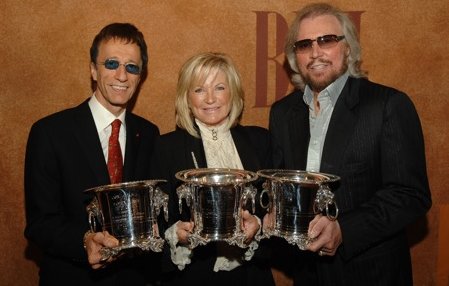 La BMI (Broadcast Music, Inc), una delle due associazioni per i diritti d'autore statunitense, ha conferito ai Bee Gees il prestigioso premio "BMI Pop Icons". Il premio è stato consegnato a Barry Gibb, Robin Gibb ed Yvonne Gibb, la vedova di Maurice, durante la cerimonia svoltasi ieri (15 maggio) a Beverly Hills (California), per festeggiare la cinquantacinquesima edizione dei "BMI Icons Awards". Uno dei momenti più importanti dello spettacolo è stato il tributo ai Gibb, con le esibizioni di Kelly Rowland delle Destiny's Child (che ha cantato "Emotion"), della star R&B gospel Bebe Winans (medley di "Nights on Broadway" e "How deep is your love" e della finalista di American Idol Katharine McPhee ("Immortality").
Fonte: bmi.com
"BMI Honors The Bee Gees as Icons at 55th Annual Pop Awards"
BMI staged its 55th Annual Pop Awards on May 15, honoring the Bee Gees as Pop Icons.
A highlight of the ceremony was the musical tribute to legendary singing trio the Bee Gees.
The brothers Gibb were honored as BMI Icons for their “unique and indelible influence on generations of music makers.” Accepting the awards were Barry and Robin Gibb, and Yvonne Gibb, wife of the late Maurice Gibb.
The tribute saw American Idol finalist Katharine McPhee perform “Immortality,” Bebe Winans singing a medley of “Nights on Broadway” and “How Deep Is Your Love” and Kelly Rowland performing “Emotion.”
The musical partnership of Barry, Robin and Maurice Gibb has produced some of the most timeless songs ever written, including “Night Fever,” “How Can You Mend a Broken Heart,” “Staying Alive,” “I Started a joke,” “How Deep Is Your Love,” “Jive Talkin,” “You Should Be Dancing” and “Run To Me.”
The Rock and Roll Hall of Fame inductees signature three-part harmony has endured for more than four decades, and with this award they join an elite list of previous BMI Icons that includes Crosby, Stills & Nash, Paul Simon, James Brown, Brian Wilson, Isaac Hayes, Dolly Parton and Carlos Santana.
Source: bmi.com
 Barry e Robin Gibb si sono esibiti insieme per la prima volta dopo la scomparsa, avvenuta tre anni fa, del loro fratello Maurice. I due superstiti della formazione sono saliti sul palco dell'albergo Diplomat di Hollywood (South Florida) lo scorso 18 febbraio per un concerto benefico privato a favore del Diabetes Research Institute.
Il concerto, chiamato "Brothers Gibb - Fire and Ice", si è svolto all'interno dell'evento annuale di beneficenza "Love and hope".
In realtà è stata una grande sorpresa, perchè, in relazione all'evento, era stata annunciata e pubblicizzata l'esibizione del solo Barry, che avrebbe dovuto eseguire canzoni del suo repertorio di solista.
Barry e Robin hanno invece passato in rassegna molte delle canzoni più famose dei Bee Gees degli anni 60 e 70.
I momenti sicuramente più emozionanti, secondo alcuni fans presenti, sono stati il tributo a Maurice Gibb, con l'interpretazione e dedica di "Don't forget to remember" e l'abbraccio a fine concerto di Barry e Robin, che sono apparsi molto felici e rilassati.
Dai primi resoconti del concerto sembra inoltre che la qualità dell'esibizione dei Gibb sia stata eccellente.
Da segnalare che Barry e Robin si sono esibiti sotto il nome "Brothers Gibb" e non "Bee Gees", lasciando forse intendere (e sperare) che ogni eventuale futura nuova attività comune sarà svolta con questa denominazione.Ciò sarebbe coerente con le loro prime affermazioni dopo la morte di Maurice, nelle quali sia barry che Robin (seppure in tempi e modi diversi), avevano fatto capire che avrebbero lasciare il nome "Bee Gees" associato alla memoria del gruppo formato da tutti e tre i fratelli.
Ecco la lista delle canzoni eseguite nel concerto del "Love and hope":
1. intro/Jive Talkin'
2. Stayin' Alive
3. Massachusetts
4. Words
5. Lonely Days
6. How Can You Mend a Broken Heart
7. Night Fever/More Than a Woman
8. To Love Somebody
9. How Deep Is Your Love
10. I Started a joke
11. Gotta Get a Message To You
12. Don't Forget To Remember
13. Tragedy/You Should Be Dancin'
(fonte: barrygibb.com, robingibb.com e Google News )
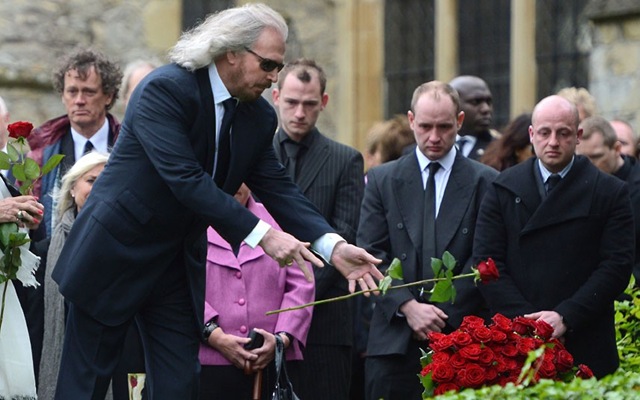
Si sono svolti venerdì 8 giugno a Thame, nell'Oxfordshire, i funerali di Robin Gibb, morto lo scorso 20 maggio a 63 anni.
Il feretro, secondo le ultime volontà dello stesso Robin, ha attraversato il paese a bordo di una carrozza di vetro trainata da quattro cavalli neri, tra centinaia di fan e amici.
Alla cerimonia funebre, svolta in forma privata, hanno preso parte, oltre ai familiari, una stretta cerchia di amici di Robin e della sua famiglia.

Barry Gibb, nel suo elogio funebre, ha dichiarato: "La vita è troppo breve. Nel caso di Robin, assolutamente troppo breve. Ha parlato di suo fratello, definito "acuto, spirito intuitivo" prima di accennare a recenti tensioni tra i due.
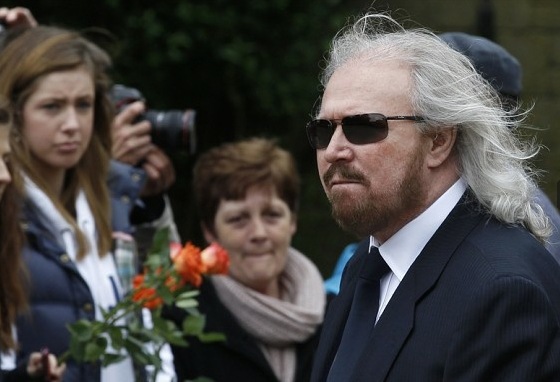
"Dio sa quanto abbiamo litigato", ha detto. "Fino alla fine siamo stati in contrasto, ma ora questo non significa nulla ". Barry ha esortato i presenti, nella chiesa di St Mary a Thame, Oxfordshire: "Se c'è conflitto nella vostra vita, sbarazzatevene." Parlando di Robin e Maurice, ha detto: "quando sei gemello, sei gemello per la vita", e sono finalmente insieme. Penso che il più grande dolore per Robin negli ultimi 10 anni, sia stato perdere il suo fratello gemello".
Centinaia di persone avevano assistito all'ingresso in chiesa della bara bianca ornata di Robin. In sottofondo "How Deep Is Your Love" dei Bee Gees.
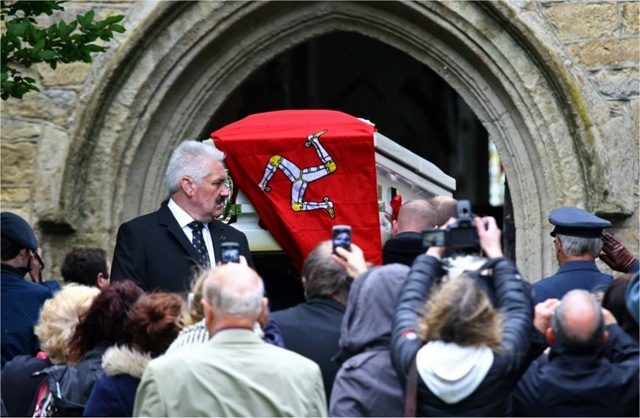
All'uscita della chiesa un lungo applauso spontaneo ha accolto l'uscita del feretro, ed il corteo funebre, guidato da Barry e dal vicario reverendo Alan Garratt. Dopo di loro i parenti più stretti, tra cui la vedova di Robin, Dwina.
Little Snow, la giovane figlia di Robin, nata dalla breve relazione di quest'ultimo con una ex governante, non ha partecipato al funerale, ma è stata menzionata da Barry alla fine del suo elogio nell'elenco dei familiari più strettti.
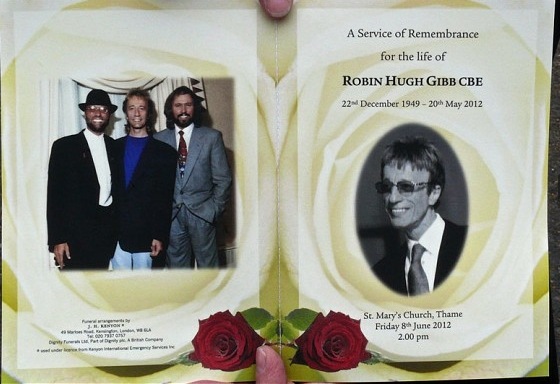
Barry ha reso omaggio a suo fratello "mente magnifica e bel cuore".
Minuti dopo che il corteo funebre aveva iniziato la sua strada attraverso le strade di Thames, città adottiva di suo fratello, Barry aveva detto: "la vita è troppo breve, in caso di Robin, assolutamente troppo breve. Avremmo dovuto altri 20 anni, 30 anni della sua mente e del suo magnifico bel cuore".
Facendo riferimento a Maurice, ha aggiunto: "Erano entrambi belli. E ora sono insieme. Sono in realtà insieme ".
L'anziana madre Barbara, troppo sconvolta per rimanere in chiesa, ha abbandonato la cerimonia all'inizio dell'elogio funebre di Barry. Suo figlio, unico superstite ha detto: "questa è un'esperienza molto strana per me, dopo aver già perso due fratelli, ed ora Rob. Così tante persone hanno amato questo ragazzo, qui c'è tanta gente illustre che lo amava. E questo è un grande piacere da testimoniare. Noi tre abbiamo hanno avuto tantissime folle, ma io non ho mai visto tanto amore in una folla come quello sto guardando oggi: per Rob, per la musica. Ed è un'esperienza molto intensa per me. Penso che sia un esperienza nessuno di noi dimenticherà. La terremo nei nostri cuori e nelle nostre menti per sempre".
Durante il funerale la vedova Dwina ha letto una poesia, intitolata "My Songbird".
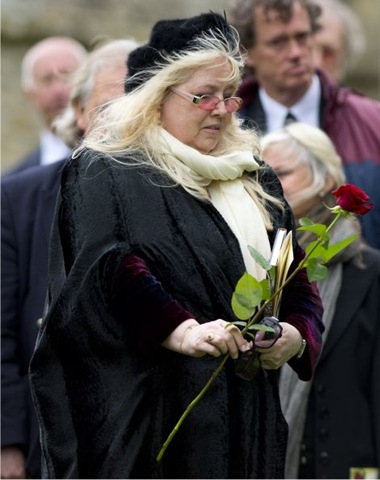
Tra le parole della poesia: "Il mio uccello è volato e la mia anima sospira - ma lui non andrà mai via". E 'stata abbracciata da Barry dopo la fine della sua lettura.
La poesia è stata seguita dalla canzone "Don't Cry Alone", una delle ultime composizioni di Robin, tratta dal "Titanic Requiem", che è stato pubblicato poche settimane prima della sua morte.
Gli ospiti hanno lasciato la chiesa al suono deella canzone dei Bee Gees "I Started A joke", che comprende le parole "Sono finalmente morto, ciò inizia fare vivere tutto il mondo".
Tra i presenti al funerale alcuni tra gli amici più stretti di Robin: il critico musicale Sir Tim Rice, lo showman Uri Geller, il cantante Peter Andre, il DJ Mike Read ed anche Robert Stigwood, produttore di tantissimi dischi di successo dei Bee Gees e del film "Saturday night fever".
(Fonte: www.telegraph.co.uk)
Barry Gibb: Robin and Maurice have been reunited in heaven
(By Nigel Bunyan, "The Telegraph" )
Barry Gibb said his brother Robin had been reunited with his twin Maurice as he paid an emotional tribute at the Bee Gee's funeral yesterday.
The sole surviving member of the trio spoke of his regret at arguing with Robin right up to the star's death.
In a trembling voice he told the congregation: "Life is too short. In Robin's case, absolutely too short.
He spoke of his brother's "sharp, intuitive wit" before hinting at recent tensions between the two of them.
"God knows how much we argued," he said. "Right up to the end we found conflict with each other, which now means nothing. It just means nothing."
He urged mourners at St Mary's Church in Thame, Oxfordshire: "If there's conflict in your lives - get rid of it."
He said Robin, 62, who died from kidney failure last month after fighting cancer and pneumonia, had finally been reunited with his twin.
Barry recalled the decade of separation endured by Robin since Maurice died in 2003.
"When you're twins, you're twins for life," he said. "You go through every emotion.
"And they're finally together. I think the greatest pain for Robin in the past 10 years was losing his twin brother, and I think it did all kinds of things to him."
Hundreds of mourners wept as Robin's ornate white coffin entered the church to the sound of the Bee Gees' hit How Deep Is Your Love.
Barry and the vicar leading the service, the Reverend Alan Garratt, walked up the aisle ahead of it as a round of spontaneous applause broke out from well-wishers outside the church.
Close relatives, including Robin's widow, Dwina, and his mother followed behind. One woman was so overcome with grief she had to be physically supported as she walked to her seat.
Robin's young daughter Snow, whose mother is a former housekeeper of his, did not attend the service - but was mentioned by Barry at the end of his eulogy as "little Snow" in a list of close family members.
Barry paid tribute to his brother's "magnificent mind and his beautiful heart".
Minutes after the funeral cortege had picked its way through the streets of his brother's adoptive town, he told mourners: "Life is too short; in Robin's case, absolutely too short.
"We should have had 20 years, 30 years of his magnificent mind and his beautiful heart."
Referring to Maurice, he added: "They were both beautiful. And now they're together. They're actually together."
The Gibbs' elderly mother, Barbara, was too distraught to remain in the church as Barry delivered his eulogy.
Her surviving son said: "This is a very strange experience, having already lost two brothers and now Rob.
"I think there are an awful lot of things happening right now that maybe you won't be aware of. And one is how many people came on such a terrible day. It is staggering.
"So many people loved this boy, so many illustrious people are here that loved him. And that is such a pleasure to witness.
"The three of us have seen a lot of crowds but I've never seen so much love in one crowd as I'm looking at today - for Rob, you know, for the music. And it's an intense experience for me.
"I think it's an experience none of us will forget. We will keep him in our hearts and minds forever."
Hundreds of Bee Gees fans lined the streets to bid the singer a final, tearful farewell.
The white, glass-sided carriage bearing his coffin was pulled through the throng by four plumed, black Friesian horses.
Each wore a decorative black cloth emblazoned with a gold treble clef in honour of a career steeped in musical folklore.
Ahead of the horses was a lone piper, behind them relatives and friends, and finally, Gibb's beloved Irish Wolfhounds, Ollie and Missy.
It had been the singer's final wish to "say a final goodbye to fans and his home town of Thame", and he did so in typically flamboyant style.
The cortege emerged from the gatehouse of Robin's estate and then moved slowly up the town's High Street. It was welcomed to the church by the strains of the Bee Gees hit How Deep Is Your Love?
Gibb's widow, Dwina, was at the head of the cortege, together with his mother.
The singer's sons, RJ and Spencer, were joined as pallbearers by Barry's son, Stevie, and Dwina's son, Steven Murphy.
Mourners included Sir Tim Rice, Uri Geller, Peter Andre and the DJ Mike Read.
During the service Dwina read a poem called My Songbird Has Flown.
It included the words: "My songbird has flown and my soul sighs - but he will never go away."
She was embraced by Barry as she returned to her seat.
The poem was followed by a recording of Don't Cry Alone - one of Robin's last compositions, from his Titanic Requiem, which premiered just weeks before his death.
Guests left the church to the sound of the Bee Gees' song I Started A joke, which includes the line "I finally died, which started the whole world living".
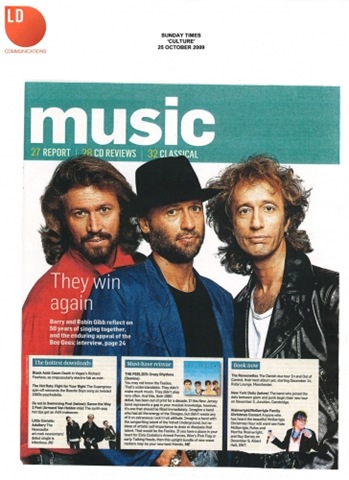 Barry e Robin Gibb hanno programmato una serie di apparizioni televisive (delle quali alcune in diretta dal vivo) ed una serie di interviste in concomitanza con l'uscita della raccolta "Ultimate Bee Gees", prevista per il prossimo 2 novembre. Lo scorso 24 ottobre l'edizione domenicale del quotidiano inglese "Times" (Sunday Times) ha pubblicato un'intervista ai due fratelli. L'intervista (ed un sondaggio) è disponibile su timesonline.uk
Si inizia Il 31 ottobre con la presenza nella popolare trasmissione televisiva inglese "Strictly come dancing", in onda su BBC1 a partire dalle 19.50. La trasmissione dovrebbe essere disponibile tramite l'iPlayer del sito della BBC ( http://www.bbc.co.uk/programmes/b00mbyy0 ) . Barry e Robin canteranno dal vivo in diretta "You should be dancing".
Il giorno 1 novembre i fratelli Gibb appariranno sulla CBS, nel corso del programma "Sunday Morning", che prevederà una sezione dedicata ai Bee Gees, con un'intervista (registrata) a Barry e Robin.
Il 3 novembre sarà la volta di due interviste televisive trasmesse in Inghilterra. La mattina si inizia con la televisione inglese ITV, sul canale GMTV (l'intervista sarà poi disponibile sul sito web del canale televisivo ( http://www.gm.tv/ ) . Durante il pomeriggio SKY UK trasmetterà un'altra intervista con i due Gibb. Si tratta in entrambi i casi di interviste pre-registrate.
Un'altra apparizione (questa volta dal vivo ed in diretta TV) è prevista il 17 novembre, quando Robin e Barry si esibiranno nel corso del seguitissimo show della televisione americana ABC, "Dancing with the stars".
Il 18 novembre la televisione tedesca Kabel Eins dedicherà la popolare trasmissione "Number One!" ai Bee Gees, e nel corso del programma sarà trasmessa una intervista (registrata) a Robin e Barry. Recentemente "Number One!" ha visto le presenze degli U2 e dei Bon Jovi.
I Gibb hanno inoltre concesso altre interviste in Inghilterra (Daily Mirror e Daily Telegraph), in Germania (Welt Am Sontag, Bunte, ZDF radio e Cable One), Australia (Sunrise), USA (saranno in seguito precisate) e Giappone (Nihon TV, Fugi TV, Music e Nikkei).
Secondo quanto dichiarato da Robin, Barry è arrivato il 28 ottobre in Inghilterra, dove resterà per quasi due settimane. I due Gibb concederanno altre interviste (giornali, radio e TV) proprio in questi giorni in cui anche Barry sarà in Inghilterra. Ulteriori dettagli su queste interviste ed altre iniziative di Robin e Barry saranno rese note quanto prima.
(Fonti: timesonline.uk , robingibb.com, google news )
Barry and Robin: TV and interviews to promote "Ultimate Bee Gees"
Barry and Robin Gibb have planned a series of television appearances (some live) and a series of interviews in conjunction with the release of the "Ultimate Bee Gees" collection, planned for the next 2 November. The last 24 October the sunday edition of the English newspaper "Times" (Sunday Times) has published an interview with two brothers. The interview (and a Bee Gees poll) is available on timesonline.uk
You begin on 31 October with the presence in the English popular broadcast "Strictly as dancing" aired on BBC1 from 19.50 (GMT +1) . The show should be available through the site of the BBC iPlayer (http://www.bbc.co.uk/programmes/b00mbyy0) . Barry and Robin will sing live "You should be dancing".
Day 1 November, Gibb brothers will appear on the CBS during the "Sunday Morning" programme, that will provide a section dedicated to the Bee Gees, with an interview (pretaped) Barry and Robin.
3 November will be the time of two television interviews transmitted in England. The morning begins with English television ITV, channel GMTV (the interview is then available on the website of the television channel (http://www.gm.tv/).) During the afternoon SKY UK will pass an interview with the two Gibb. It is in both cases of pretaped interviews.
An appearance (this time live in TV) is planned on 17 November, when Robin and Barry perform ongoing very popular American television ABC show, "Dancing with the stars" .
On 18 November German television Kabel Eins will dedicate the popular transmission "Number One!" to the Bee Gees, and in the course of the show will be aired an interview (registered) with Robin and Barry. "Number One!" has recently dedicated to U2 and Bon Jovi.
The Gibb have also granted other interviews in England (Daily Mirror and Daily Telegraph), Germany (Welt Am Sontag, Bunte, radio ZDF and Cable One), Australia (Sunrise), USA (will be soon specified) and in Japan (Nihon TV, Fugi TV, Music and Nikkei).
As stated by Robin, Barry arrived on 28 October in England, where will remain for almost two weeks. The two Gibb will grant other interviews (newspapers, radio and TV) precisely in these days where Barry will be in England. Details about these interviews and other initiatives of Robin and Barry will be disclosed as soon as possible.
---------------------------------------------------------------------
"The Bee Gees: 50 years on - Robin and Barry Gibb talk about 50 years of the band, from tragedy to how they changed the world" (Rob Fitzpatrick, Times)
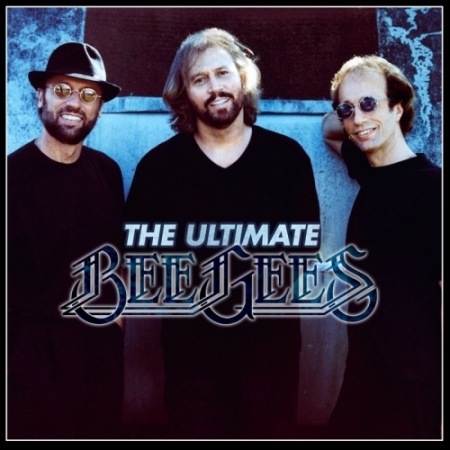 Robin and Barry Gibb are so overpoweringly familiar that just sitting opposite them feels odd. Robin, now 59 and still pencil-thin, is the sharper, the more protective of the two. Robin's the one you can imagine having an actual stand-up fight in defence of the Bee Gees' good name, while Barry, 63, seems rather more relaxed, beatific even, his snow-white hair artfully draped over his shoulders, a small smile never far from his lips.
The pair arrange themselves on the long black sofas at the back of Studio A at Hit Factory, in Miami, looking entirely at home. Of course, they should do - in the mid-1970s, Barry, Robin and their late brother, Maurice, pretty much moved in here to create some of the biggest-selling records of all time.
By that time, they had already enjoyed enormous success as a neo-psychedelic pop-rock group signed to the same management company as the Beatles. Then they had split. Then they had suffered three full years without a single hit. It's a long, long way from being in such a crushing slump that you're reduced to banging out gags between your oldies in a Yorkshire variety club to writing and recording a soundtrack album that sells in excess of 30m copies, but the Bee Gees made that journey in just three years.
The soundtrack to Saturday Night Fever made the Bee Gees as famous as it is possible for a human being to be. So famous, in fact, that they were easy to mock - Hair! Teeth! Chest wigs! - easy to make a joke out of. Yet 50 years after they began singing together at home in Manchester, a lot of their music still sounds utterly remarkable, whether it's the late-1960s hipster Bee Gees of albums such as Idea and Horizontal ("Oasis absolutely love that record," Robin says proudly), the global-superstar Bee Gees of Nights on Broadway, You Should Be Dancing and Jive Talkin', or the radio-eating, grown-up super-pop Bee Gees of How Deep Is Your Love or You Win Again. There is a reason that their catalogue of songs is one of the most profitable in pop history.
"It's taken us six years to come back from Maurice's death," Barry says. "His passing scattered everything to the wind. Robin drove himself on, but I couldn't find the passion, I couldn't force anything else out. I thought we were done."
"Ours is such a long story," says Robin, a glass of water in front of him. "But when we were young, the only risk was not taking the risk. We always knew we'd win it if we were in it..."
Products of a show-business home - their father, Hugh, was a band-leader who met their mother, Barbara, at one of his gigs - the Gibb brothers began singing together in cinemas while growing up in Manchester. In 1958, the family emigrated to Australia, and the three boys began performing professionally, playing pubs and speedways, singing on TV, even doing pantomime. Four years later, they would leave Australia by boat, spending three months working their passage to England. While on board, their single Spicks and Specks - their 13th stab at a hit - went to No 1 back home. The Bee Gees arrived in Southampton in February 1967 - three weeks later, they'd signed a five-year management deal with Robert Stigwood, the director of NEMS Enterprises, a company owned by the manager of the Beatles, Brian Epstein.
"We had a blind belief in ourselves," Robin says, laughing suddenly. "Luckily, we were also blind to the immense amount of competition there was."
"We were pretty bad then," Barry says. "But we were fearless."
Stigwood insisted on a group, so the brothers' Australian friends Vince Maloney and Colin Peterson were hired. They signed a deal with Polydor and delivered a huge hit, New York Mining Disaster 1941. The band's debut LP, Bee Gees 1st, was a critical and commercial smash. Wonderfully picturesque songs such as Harry Braff and Every Christian Lion-Hearted Man Will Show You pointed clearly towards a Britpop sound still 30 years in the future. Just teenagers, the brothers became part of the pop royalty of the day.
"We went to nightclubs like the Cromwellian and the Bag O' Nails," Robin says. "I liked the Speakeasy - when you went down the stairs, there was this coffin at the bottom. If you had your membership card, the wall would turn around and you went in."
"The Beatles and the Stones would sit around like kings," Barry says. "And we became part of that scene."
In 1969, the Bee Gees released the double-LP epic Odessa, an album so rich in fantastic songs and ideas - Melody Fair, "an Eleanor Rigby sort of thing", is brilliantly dramatic, while Whisper Whisper is surely the sharpest, most morally complex song ever written about a drug-dealer - that, 40 years later, it remains a remarkable document to free-spirited creativity.
"Odessa was our madness," Robin says. "We were recording in the studio the Beatles had been in, and we were unafraid to work with whatever came into our heads." Sadly, more progressive recordings were scaring off their fan base. Arguments followed and the brothers fell out. "There are periods even Robin and I don't talk about," Barry says. "That's one of them."
Between 1970 and 1975, the Bee Gees scored only a handful of hits. It was the opening track of 1975's Main Course record that pushed the brothers into a whole new stratosphere of fame and success. Jive Talkin' was an immediate, huge hit in America and Britain, as was the follow-up, Nights on Broadway, which featured Barry's crystalline falsetto. Their next album, Children of the World,went platinum, with You Should Be Dancing kicking off a string of hits.
The brothers were recording in France when Stigwood called to ask if they would be interested in creating the soundtrack to a new - as yet untitled - film. Six or seven songs should do it, he told them. Oh, and could they come up with a title for it?
"You never really know if something's a hit or not," Barry says. "Apart from Staying Alive. When we played it to George Martin really early on, he took two steps backwards and said, 'My God! I've never heard anything like it!'"
The film was 1977's Saturday Night Fever, and the album produced six No 1 hits. Night Fever was the Bee Gees' first UK No 1 for a decade. Soon, one out of every seven families in America would own a copy. "Fever introduced the most creative recording period in our lives," Barry says. "The following five years, we had a ball. We were the biggest thing around."
"This was the peak of record sales in all of history," Robin says. "Since 1967, there have only been three albums that have truly affected the culture, and that's Sgt Pepper, Fever and Thriller. There's not many people who know what that feels like. We're like the guys who've been to the moon."
"John Lennon said he wished he'd got a song like Fever," Barry says. "But we were under fire straight after. We became the people who had to be punished, so we gave our best songs to other people to secure our reputation as songwriters."
By the end of the 1970s, the Bee Gees were involved in a multi-million-dollar lawsuit with Stigwood, and they stopped recording as a group. Barry wrote Guilty for Barbra Streisand and Heartbreaker for Dionne Warwick, while the brothers came together to write Islands in the Stream for Kenny Rogers and Dolly Parton, as well as creating the startling Chain Reaction for Diana Ross. No new Bee Gees album would emerge until ESP - and the hit You Win Again - in 1987, their first UK No 1 for eight years. The 20th - and, to date, last - Bee Gees album, This Is Where I Came In, had definite echoes of their late-1960s pop-rock glories and was released in 2001.
"We've made some of the best records of all time," Robin says as a Japanese film crew prepares for his arrival next door. "And that's because we're not afraid of trying new things. We're only really afraid of losing an idea."
Would they like to start again? "God, no!" Robin laughs out loud. "Pop music used to be so much more gregarious, more flamboyant. Today, it's so conservative."
"We've had incredible happiness and incredible sadness in our lives," Barry says. "But we know there are songs we have written that will always touch people."
(Sources: timesonline.uk , robingibb.com, google news )
 Quando, con qualche minuto di ritardo la band di Robin Gibb inizia a suonare intonando una intro molto accattivante (che scopriremo si tratta di "Chain reaction", il successo che i Gibb scrissero per Diana Ross), ho subito la sensazione che stasera si vedrà un gran bel concerto al Black Box, la sala più grande dell'Heineken Music Hall di Amsterdam.
La sala (che contiene circa 5.000 posti a sedere) è quasi tutta piena, io mi trovo in prima fila, in una posizione devo ammettere abbastanza invidiabile, sia dal punto di vista dell'acustica che, indiscutibilmente, per vedere (e fotografare) Robin e la sua band. Robin entra qualche attimo dopo e la intro di cui si parlava si trasforma in "You win again", la prima canzone del concerto.
L'entusiasmo del pubblico è ovviamente alle stelle. Io mi trovo accanto (certo che la coincidenza è incredibile) giusto ad un fan italiano conosciuto su Facebook, con il quale, pur non avendolo ancora fisicamente incontrato, mi sono messaggiato fino a pochi istanti prima dell'inizio. Dall'altro lato c'è una simpatica fan olandese con il suo gruppo di amici. Poco prima del concerto ho avuto il piacere di incontrare tanti fan olandesi e tedeschi con i quali sono in contatto da tanti anni. L'atmosfera è di puro entusiasmo, e noto con immenso piacere che l'audience è anagraficamente abbastanza "variegata", in quanto sono presenti tanti ragazzi molto più giovani del vostro "attempato" redattore.
Già dall'intro e da "You win again" capisco che il concerto di stasera non somiglierà all'ultimo al quale ho assistito nel settembre del 2004. Infatti non c'è l'orchestra ed i suoni della band e dei coristi sono questa volta splendidamente puliti, asciutti e ben bilanciati con la voce di Robin. Inoltre si nota subito la piacevole natura rockeggiante, essenziale ma per nulla povera degli arrangiamenti e la bravura dei componenti della band: insomma ci sono tutti gli ingredienti per una bellissima serata di grande musica firmata dai fratelli Gibb.
Innegabile comunque, va detto subito a scanso di equivoci, non pensare all'assenza di Barry, visto peraltro che tutti sappiamo benissimo che la stragrande maggioranza della playlist dello show sarà rappresentata dai grandi successi dai Bee Gees (è scritto pure sul biglietto: "An evening with the Bee Gees greatest hits"). Impossibile pertanto negare che la magia della serata potrebbe essere completa soltanto con tutti e tre i Gibb.
Ciò premesso, ci accorgeremo ben presto che l'ottimo Robin ci darà tantissime emozioni, perchè la sua voce è potente e bella come nei tempi migliori, e gli arrangiamenti delle canzoni le rendono splendidamente compatibili con le sue caratteristiche vocali. La cosa non era del tutto riuscito durante il Magnet tour del 2004, sebbene, come anche riportato da altri fan che (a differenza di chi vi scrive) videro più concerti, anche in quell'occasione, dopo un inizio del tour quasi negativo, con il passare dei concerti si andò tantissimo a migliorare. Personalmente ricordo di avere assistito, durante il concerto di Monaco a molti (quasi tutti a dire il vero) esempi di buona musica.
Inoltre si nota subito un'altra grande differenza rispetto a Monaco: Robin è di ottimo umore, scherza tra una canzone e l'altra, sorride e mostra una serenità sicuramente non messa in mostra nel concerto bavarese del settembre 2004. Avevo peraltro già piacevolmente osservato questo benessere nel corso dell'incontro pomeridiano con il Nostro, ed adesso questa sensazione diventa una certezza, che si rivelerà un altro ingrediente di successo della serata olandese.
Dopo il buon inizio di "You win again", accolta trionfalmente dal pubblico che è già caldissimo, si passa a "More than a woman", che Robin introduce definendola "una canzone da -quel- film". Chi come me è in prima fila riesce a distinguere chiaramente un sorriso (a metà tra il sarcastico e l'ironico) di Robin, e non sarà il solo, visto che accompagnerà tutte le presentazioni dei pezzi tratti da "Saturday Night Fever". Detto questo, anche grazie a quanto già detto su arrangiamenti, band e coristi, la versione proposta da Robin non è niente male, anzi!
Si passa ora ad un classico, "I started a joke", che toglie ogni briciola di dubbio sull'ottimo stato della voce di Robin: ottima esecuzione, assolutamente in linea con quelle dei tempi migliori. Ed è la prima, meritatissima e lunga, standing ovation!
Ed ecco ora "Emotion", con i cori che ripropongono le atmosfere originali della versione portata al vertice delle classifiche da Samantha Sang. La versione di stasera è comunque ottima, niente a che vedere con alcune incertezze e sbavature notate a Monaco (forse dovute anche all'arrangiamento con l'orchestra).
Si passa ora ad "If I can't have you", che, proprio per trovare un pelo nell'uovo, è forse la canzone che provoca qualche difficoltà, specialmente perchè l'arrangiamento (molto rock), tende ad allontanare dai ricordi dei Tavares ed anche della versione dei Gibb stessi.
Ed ecco "Saved by the bell", seconda inevitabile standing ovation: impeccabile e grande resa vocale di Robin, con un arrangiamento piacevolmente essenziale.
"How deep is your love" inevitabilmente risente dei milioni di ascolti riferibili alla voce di Barry, ma Robin la propone con molto trasporto, accompagnato da una buona performance dei coristi.
La canzone che viene dopo era una delle più attese da chi vi scrive. Si tratta della bella "Alan Freeman days", l'unica canzone proposta da Robin tra quelle che dovrebbero fare parte del suo futuro (?) nuovo album solista. E' una grande performance vocale, uno dei momenti più ricchi di emozione della serata. Ripetitivo ma necessario l'elogio di band ed arrangiamenti.
Dopo l'ottima accoglienza da parte del pubblico per l'unico inedito, Robin presenta una canzone che definisce "molto attuale, visti i recenti avvenimenti". Si tratta di "New york mining disaster 1941", ed è chiaro il riferimento alla recente vicenda dei minatori cileni, intrappolati (per fortuna con un lieto fine) all'interno della loro miniera. Versione ovviamente ottima, vista la quasi naturale adattabilità della canzone alla voce ed ai tempi di Robin. Da notare che a Monaco (e la cosa non fu affatto spiacevole) "NYMD 1941" fu proposta con un arrangiamento "midtempo", ricco di chitarre e batteria. La versione di stasera è invece assolutamente in linea con quelle da sempre proposte durante i concerti dei Bee Gees.
Mentre si inizia a notare un crescente entusiasmo da parte del pubblico, con crescente assembramento sotto il palco che la security (forse sorpresa dal calore del pubblico) non riesce ad arginare, giunge il momento di "Heartbreaker", ed è uno dei migliori momenti del concerto, anche se con la canzone che segue (l'ottima "Massachussetts") è ancora standing ovation. La cosa si ripete subito dopo con "Gotta get a message to you". Adesso (senza retorica) è davvero un susseguirsi di emozioni, visto che Robin le canta davvero perfettamente. Ormai siamo tutti insieme e meno che meno si pensa a sedersi quando arriva "Night fever", con un arrangiamento coinvolgente anche se molto meno "disco" di quanto si aspetterebbero i die hard del periodo "helium" dei Gibb.
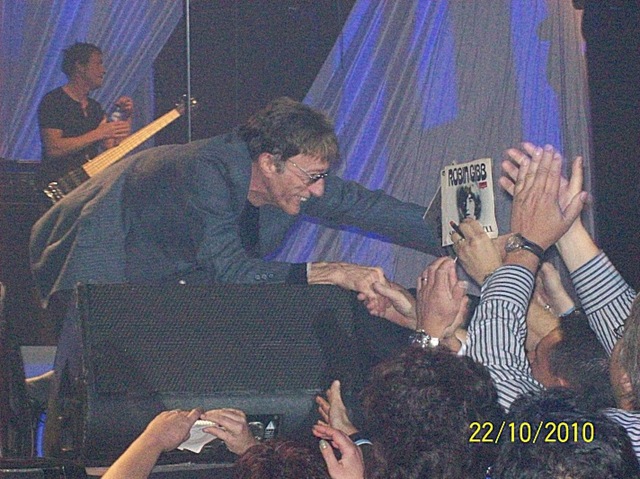 Arriva "Too much heaven", performance lievemente meno brillante ma sempre di ottimo livello, seguita da una grande e credibile versione di "To love somebody", che viene accolta da un lungo applauso.
Molti fan sono ormai proprio sotto il palco e stringono le mani a Robin, che apprezza e non rifiuta il contatto fisico, sotto l'occhio preoccupato dei tizi della security, che devono completamente soccombere dopo l'entusiastica reazione riservata ad "Islands in the stream", proposta da Robin & band in una versione molto simile a quella proposta dai Bee Gees nei concerti di fine anni 80 ed in seguito in quelli degli anni 90. E' uno dei picchi della serata, l'atmosfera è gioiosa, pure quando inizia una delle più tipiche canzoni usualmente cantate da Barry, "Words", della quale Robin propone un'altrettanto credibile ed emozionante versione.
Il pubblico apprezza tantissimo e nel frattempo si passa a "Woman in love" (proposta per ovvi motivi di "opportunità" con un'obbligatoria variazione di testo."- you are - a woman in love".), che sebbene è cantata abbastanza bene da Robin, peraltro con un sostanzioso accompagnamento "sing-along" del pubblico, risente (e non può essere diversamente) della potentissima associazione con la Streisand. Ma tutto passa quando si sentono le primissime note di "Juliet", cavallo di battaglia di Robin e da sempre momento di grande entusiasmo. Il pubblico regala a Robin un lunghissimo applauso e continua ad intonare il coro da stadio che caratterizza "Juliet", sperando in una reprise che tuttavia Robin e la band non concedono.
Tuttavia, nell'entusiasmo generale, si passa ad una rockettara "You should be dancing", uno dei momenti più particolari del concerto. A mio avviso la versione ascoltata, sebbene perda una parte del sapore disco della versione originale, si adatta molto di più a Robin, che infatti è assolutamente a suo agio. Ottima.
E qui il buon Robin (ovviamente pro-forma) ringrazia il pubblico di Amsterdam ed il pubblico "proveniente da qualsiasi altra parte" (ricordandosi forse della cosmopolita rappresentanza di fan provenienti da quattro diversi angoli del mondo che aveva incontrato soltanto due ore prima.)
E quindi siamo ai canonici bis. Nella bolgia più assoluta sotto il palco e un pò dappertutto nella hall, Robin inizia con "Jive talkin'" , e , dopo l'ennesimo contatto "sotto palco" prosegue con l'inevitabile "Stayin'alive". Per entrambe le canzoni valgono le considerazioni (positive) fatte per "You should be dancing".
L'ultima canzone dello splendido concerto è "Tragedy", ventitreesima canzone che, dopo quasi due ore, conclude degnamente l'esibizione di Robin, che onestamente non sembra a nove settimane di distanza da un intervento chirurgico "salva vita".
Nonostante le speranze di una parte del pubblico che lo vorrebbe di nuovo sul palco, stavolta è proprio finita. E' stata una bella serata, e ci siamo accorti tutti che le doti canore di Robin sono ancora intatte. Ci siamo accorti (credo che molti di noi tra il pubblico non ne avevamo bisogno) che il nostro amore per la musica dei Gibb non è dimunuito dopo tanti anni e tantissimi, indelebili ricordi.
Cedo alla retorica per definire l'emozione e l'entusiasmo coinvolgente che ho percepito all'Heineken music hall di Amsterdam una ennesima testimonianza della longevità e della unicità delle atmosfere magiche che le composizioni dei fratelli Gibb riescono ad offrire (per esempio nel mio caso) dopo oltre 35 anni di ascolti. Davvero mi auguro di rivivere ancora questi momenti, magari avendo la fortuna di ascoltare anche la voce di Barry Gibb.






 Feed RSS 0.91
 Feed Atom 0.3